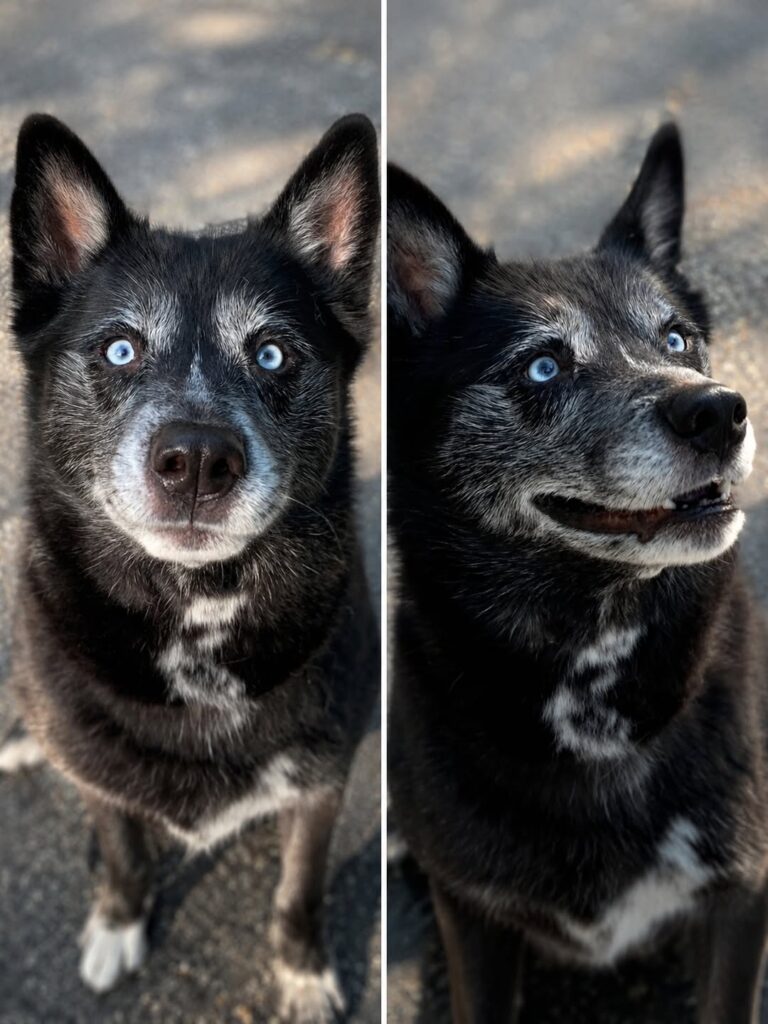
Six-year-old Oshie looks like she stepped straight out of Game of Thrones. She’s striking, calm, deeply connected to her people, and incredibly gentle with the family’s baby. She plays beautifully with the other dog in her household and does well with dogs she knows.
But Oshie has always been a little intense around unfamiliar dogs.
Recently, her family noticed she was becoming reactive on leash when passing other dogs, and she’d had a few minor off-leash disagreements with dogs she didn’t know. Oshie is the type of dog that doesn’t back down when challenged.
So how do we address it?
At six years old, it’s unlikely that Oshie’s core temperament will change. The goal isn’t to turn her into a social butterfly. The goal is to give her humans more influence over her decisions and reduce the intensity of her reactions.
Here’s the plan:

New leash protocols that interrupt and redirect reactive behavior before it can build momentum. Behaviors that aren’t allowed to play out gradually lose both frequency and intensity.
Rock-solid recall. Oshie must come immediately when called—even when other dogs are present.
Choose environments wisely. Dog parks, crowded beaches, and places where dogs gather and linger aren’t ideal for dogs like Oshie.
Trails where everyone is moving and passing by are often a much better fit. Social overstimulation is frequently the trigger. One of the biggest mistakes owners make is trying to force a dog to be something they’re not.
Success isn’t always creating a dog that loves every dog it meets. Sometimes success is understanding your dog’s temperament, building reliable obedience, making smart choices, and setting your dog up to thrive.
Important: If your dog is attacking and causing injury to other dogs, these protocols are not enough. Professional training is essential, and dogs that inflict damage should not be allowed off leash in unfenced areas.